Friday, February 25, 2011

BMW F800GS Touring Bike


In 1980, BMW Motorrad invented the adventure motorcycle category with the advent of the trailblazing R 80 GS, which won the grueling Paris-Dakar year after year. And now, over twenty-five years later, BMW Motorrad has created yet another revolutionary dual-purpose motorcycle that provides unprecedented levels of desert-devouring, roost-throwing performance: the amazing 2008 F 800 GS.
Fulfilling a need for a pure off-road oriented motorcycle that still has all the power, handling and reliability required for long-distance adventure touring as well as on-street handling, the F 800 GS is perfectly positioned as a middleweight dual-purpose enduro. Featuring an asymmetrical double headlight, its look is sleek, trim and 100% aggressive. With a compact 85-horsepower parallel twin engine, lightweight steel trellis frame and double-sided swingarm, not to mention a chain drive and longer front and rear suspension travel, there has never been a BMW dual-purpose machine offering such a unique blend of power, comfort and off-road muscle.
Torque is generous at 61 lb/ft, and with a six-speed gear box, switchable ABS, 42-degree turning radius, 400-watt alternator, wide foot rests and 4.2-gallon gas tank located under the seat for a low center of gravity, the F 800 GS has all the technology of a touring bike, while still possessing the optimum power-to-weight characteristics of a high-performance enduro. With a dry weight of just 392 lbs, the F 800 GS is lightweight and agile enough for precise handling, making it ideal for screaming around on the twisties or tearing through the dirt.
In the never-ending quest to exceed our own exacting standards, BMW Motorrad has once again reached an entire new level of engineering excellence with the F 800 GS, an adventure-hungry motorcycle that is destined to be a classic. Get yours NOW at Touring Sport BMW!

Riding a BMW motorcycle makes everyone a better rider because the machine is so supremely capable. But when coupled with a rider who is equally as capable, the entire two-wheeled experience becomes light years more rewarding. And now there's a way for every BMW owner to amp up their skills and maximize their riding potential like never before. That's because for the first time ever, official BMW Motorrad rider training is now available in the U.S. at the BMW Performance Center in South Carolina, near BMW Manufacturing Co., LLC, the birth place of the BMW X5 SAV in Spartanburg. It's also only four hours away from Deal's Gap, one of the most stunning riding locations in the United States.

Starting this September, the BMW Performance Center will be offering one day and two day riding instruction for both on and off-road. If you don't have a BMW motorcycle, it's no problem; you can just rent one at the Performance Center. Whether you're an off-road rider, love to tour, or are more sport-bike oriented, the drills and instruction you'll receive at the Performance Center will bring your riding skills and confidence to a whole new level.
After taking these classes, riders will acquire the practical and technical skills to make every ride safer and more enjoyable than ever before. It should be noted that these courses are recommended those with intermediate riding experience.
Here's how it works: choose whatever discipline you prefer, road or off-road, and take a one day class. Or choose both road and off-road and do them both in a two day on and off-road class. Our off-road program is patterned after the curriculum at the BMW Enduro Park In Hechlingen, Germany, and involves a variety of drills and exercises, ranging from basic bike set up and body position, throttle and clutch control, to braking and cornering. After that, riders will then hit the trail with a BMW-certified instructor.

If off-road isn't your thing, you can go for the on-road instruction, which stresses the same sort of control and finesse, only on the pavement. The on-road course also involves some dual-sport drills which will help every street rider handle the section of gravel or unpaved road that inevitably occurs on a ride.

The techniques and maneuvers that students learn during these classes are invaluable, and will make everyone a more safer, skilled, and competent rider. After these classes, there will be no road you cannot conquer as you will possess knowledge and abilities that can be put to use everywhere you ride, whether it's on the trail, the race track, or just racing around town.

BMW F800GS Touring Bike


In 1980, BMW Motorrad invented the adventure motorcycle category with the advent of the trailblazing R 80 GS, which won the grueling Paris-Dakar year after year. And now, over twenty-five years later, BMW Motorrad has created yet another revolutionary dual-purpose motorcycle that provides unprecedented levels of desert-devouring, roost-throwing performance: the amazing 2008 F 800 GS.
Fulfilling a need for a pure off-road oriented motorcycle that still has all the power, handling and reliability required for long-distance adventure touring as well as on-street handling, the F 800 GS is perfectly positioned as a middleweight dual-purpose enduro. Featuring an asymmetrical double headlight, its look is sleek, trim and 100% aggressive. With a compact 85-horsepower parallel twin engine, lightweight steel trellis frame and double-sided swingarm, not to mention a chain drive and longer front and rear suspension travel, there has never been a BMW dual-purpose machine offering such a unique blend of power, comfort and off-road muscle.
Torque is generous at 61 lb/ft, and with a six-speed gear box, switchable ABS, 42-degree turning radius, 400-watt alternator, wide foot rests and 4.2-gallon gas tank located under the seat for a low center of gravity, the F 800 GS has all the technology of a touring bike, while still possessing the optimum power-to-weight characteristics of a high-performance enduro. With a dry weight of just 392 lbs, the F 800 GS is lightweight and agile enough for precise handling, making it ideal for screaming around on the twisties or tearing through the dirt.
In the never-ending quest to exceed our own exacting standards, BMW Motorrad has once again reached an entire new level of engineering excellence with the F 800 GS, an adventure-hungry motorcycle that is destined to be a classic. Get yours NOW at Touring Sport BMW!

Riding a BMW motorcycle makes everyone a better rider because the machine is so supremely capable. But when coupled with a rider who is equally as capable, the entire two-wheeled experience becomes light years more rewarding. And now there's a way for every BMW owner to amp up their skills and maximize their riding potential like never before. That's because for the first time ever, official BMW Motorrad rider training is now available in the U.S. at the BMW Performance Center in South Carolina, near BMW Manufacturing Co., LLC, the birth place of the BMW X5 SAV in Spartanburg. It's also only four hours away from Deal's Gap, one of the most stunning riding locations in the United States.

Starting this September, the BMW Performance Center will be offering one day and two day riding instruction for both on and off-road. If you don't have a BMW motorcycle, it's no problem; you can just rent one at the Performance Center. Whether you're an off-road rider, love to tour, or are more sport-bike oriented, the drills and instruction you'll receive at the Performance Center will bring your riding skills and confidence to a whole new level.
After taking these classes, riders will acquire the practical and technical skills to make every ride safer and more enjoyable than ever before. It should be noted that these courses are recommended those with intermediate riding experience.
Here's how it works: choose whatever discipline you prefer, road or off-road, and take a one day class. Or choose both road and off-road and do them both in a two day on and off-road class. Our off-road program is patterned after the curriculum at the BMW Enduro Park In Hechlingen, Germany, and involves a variety of drills and exercises, ranging from basic bike set up and body position, throttle and clutch control, to braking and cornering. After that, riders will then hit the trail with a BMW-certified instructor.

If off-road isn't your thing, you can go for the on-road instruction, which stresses the same sort of control and finesse, only on the pavement. The on-road course also involves some dual-sport drills which will help every street rider handle the section of gravel or unpaved road that inevitably occurs on a ride.

The techniques and maneuvers that students learn during these classes are invaluable, and will make everyone a more safer, skilled, and competent rider. After these classes, there will be no road you cannot conquer as you will possess knowledge and abilities that can be put to use everywhere you ride, whether it's on the trail, the race track, or just racing around town.

2010 Grand Prix Motorcycle Racing Season--Preview,Rules.Results News

The 2010 Grand Prix motorcycle racing season was the 62nd F.I.M. Road Racing World Championship season. It was the first season for the new Moto2 class.
Jorge Lorenzo was crowned MotoGP World Champion for the first time, after he finished third in the Malaysian Grand Prix on 10 October. Finishing on the podium in 16 of the 18 races – including nine victories – to be held during the season, Lorenzo amassed a record points total for the premier class, achieving a total of 383 points, ten more than the previous best score, achieved by Valentino Rossi in 2008.Second in the championship was Dani Pedrosa, 138 points behind Lorenzo, recording four race victories over the course of the season. He and third-placed Rossi both missed at least three races due to injuries suffered during race weekends; Pedrosa suffered a fractured collarbone at Motegi, while Rossi suffered a broken leg at Mugello, resulting in the first missed races of his entire Grand Prix career. The only other rider to win races during the season was Casey Stoner, who finished fourth in the championship. Stoner won three races in the latter half of the season, winning the inaugural races in Aragón, as well as the races at Motegi and his home race at Phillip Island.
Nine different riders won races in the secondary Moto2 championship, and former MotoGP rider Toni Elías claimed the inaugural championship title, with three events to spare as his seven victories had taken him out of reach of his rivals. Second place went to Julián Simón, who despite not winning a race, finished on the podium eight times. Third place in the championship went to Andrea Iannone, who achieved three victories but lost out on runner-up in the championship to Simón by just two points. The season was also tinged with tragedy as the inaugural race winner in the class, Shoya Tomizawa, died of injuries suffered in an accident at Misano; the first on-track fatality at Grand Prix level since Daijiro Kato was killed in the senior class at Suzuka in 2003.Other riders to win races were Jules Cluzel, Yuki Takahashi, Roberto Rolfo, Alex de Angelis, Stefan Bradl and Karel Abrah1am.
Spanish riders once again dominated the 125cc championship, with a 26-race winning streak for Spanish riders only being broken by Bradley Smith at the final race of the season in Valencia. The top three championship placings went to Spanish riders as Marc Márquez won the championship ahead of Nicolás Terol and Pol Espargaró. With ten victories, Márquez became the second youngest World Champion ever at the age of &000000000000001700000017 years, &0000000000000263000000263 days, with only Loris Capirossi's 1990 triumph coming at a younger age.Smith was best non-Spanish rider, in fourth place.

Rule changes

  • A number of rule changes have been enacted for the 2010 season. They include reductions to test mileage, the introduction of engines with prolonged life, the use of cast iron brakes instead of carbon brakes, the use of only one spare bike, and the cancellation of one of the Friday practice sessions.Despite this, two Friday practice sessions were held in Aragón and the final two races.
  • From 2010 on, rookies in the MotoGP class will be permitted to sign only with private teams. Suzuki are exempt from this rule, as they only run one factory team and have no satellite teams.

Moto2 introduction

The Moto2 class replaces the 250cc class for 2010. The original intention was for Moto2 bikes to run alongside the existing 250cc machinery, however the entry list consisted of Moto2 machines only. The new class aims to be economical, with measures such as limiting electronics (which will be supplied only by FIM sanctioned producers), the ban of carbon-fibre brakes and the use of steel brakes only; however, there will be no chassis limitations. All Moto2 bikes will use a mandatory 600 cc Honda engine, which will probably be prepared by Honda's European specialized tuner Ten Kate, and which will be expected to produce a power of about 150 bhp. Control tyres for the new series will be provided by Dunlop only, despite early intentions of leaving tyre specifications free.

Grands Prix

The provisional calendar was announced on November 10, 2009. In case a circuit is not able to hold a scheduled Grand Prix, a reserve race will take place on the same day at the Motorland Aragón circuit. This was updated six days later, with a date change for the Czech round, moving one week forward. It was announced on 18 March 2010 that Aragón would be included on the calendar, at the expense of the Balatonring, due to the fact that construction work on the latter circuit could not be completed on time. On 19 April 2010, it was announced that the Japanese Grand Prix will be moved to October 3, due to the disruption to air travel after the second eruption of the Eyjafjallajökull volcano in Iceland.

2010 Grand Prix Motorcycle Racing Season--Preview,Rules.Results News

The 2010 Grand Prix motorcycle racing season was the 62nd F.I.M. Road Racing World Championship season. It was the first season for the new Moto2 class.
Jorge Lorenzo was crowned MotoGP World Champion for the first time, after he finished third in the Malaysian Grand Prix on 10 October. Finishing on the podium in 16 of the 18 races – including nine victories – to be held during the season, Lorenzo amassed a record points total for the premier class, achieving a total of 383 points, ten more than the previous best score, achieved by Valentino Rossi in 2008.Second in the championship was Dani Pedrosa, 138 points behind Lorenzo, recording four race victories over the course of the season. He and third-placed Rossi both missed at least three races due to injuries suffered during race weekends; Pedrosa suffered a fractured collarbone at Motegi, while Rossi suffered a broken leg at Mugello, resulting in the first missed races of his entire Grand Prix career. The only other rider to win races during the season was Casey Stoner, who finished fourth in the championship. Stoner won three races in the latter half of the season, winning the inaugural races in Aragón, as well as the races at Motegi and his home race at Phillip Island.
Nine different riders won races in the secondary Moto2 championship, and former MotoGP rider Toni Elías claimed the inaugural championship title, with three events to spare as his seven victories had taken him out of reach of his rivals. Second place went to Julián Simón, who despite not winning a race, finished on the podium eight times. Third place in the championship went to Andrea Iannone, who achieved three victories but lost out on runner-up in the championship to Simón by just two points. The season was also tinged with tragedy as the inaugural race winner in the class, Shoya Tomizawa, died of injuries suffered in an accident at Misano; the first on-track fatality at Grand Prix level since Daijiro Kato was killed in the senior class at Suzuka in 2003.Other riders to win races were Jules Cluzel, Yuki Takahashi, Roberto Rolfo, Alex de Angelis, Stefan Bradl and Karel Abrah1am.
Spanish riders once again dominated the 125cc championship, with a 26-race winning streak for Spanish riders only being broken by Bradley Smith at the final race of the season in Valencia. The top three championship placings went to Spanish riders as Marc Márquez won the championship ahead of Nicolás Terol and Pol Espargaró. With ten victories, Márquez became the second youngest World Champion ever at the age of &000000000000001700000017 years, &0000000000000263000000263 days, with only Loris Capirossi's 1990 triumph coming at a younger age.Smith was best non-Spanish rider, in fourth place.

Rule changes

  • A number of rule changes have been enacted for the 2010 season. They include reductions to test mileage, the introduction of engines with prolonged life, the use of cast iron brakes instead of carbon brakes, the use of only one spare bike, and the cancellation of one of the Friday practice sessions.Despite this, two Friday practice sessions were held in Aragón and the final two races.
  • From 2010 on, rookies in the MotoGP class will be permitted to sign only with private teams. Suzuki are exempt from this rule, as they only run one factory team and have no satellite teams.

Moto2 introduction

The Moto2 class replaces the 250cc class for 2010. The original intention was for Moto2 bikes to run alongside the existing 250cc machinery, however the entry list consisted of Moto2 machines only. The new class aims to be economical, with measures such as limiting electronics (which will be supplied only by FIM sanctioned producers), the ban of carbon-fibre brakes and the use of steel brakes only; however, there will be no chassis limitations. All Moto2 bikes will use a mandatory 600 cc Honda engine, which will probably be prepared by Honda's European specialized tuner Ten Kate, and which will be expected to produce a power of about 150 bhp. Control tyres for the new series will be provided by Dunlop only, despite early intentions of leaving tyre specifications free.

Grands Prix

The provisional calendar was announced on November 10, 2009. In case a circuit is not able to hold a scheduled Grand Prix, a reserve race will take place on the same day at the Motorland Aragón circuit. This was updated six days later, with a date change for the Czech round, moving one week forward. It was announced on 18 March 2010 that Aragón would be included on the calendar, at the expense of the Balatonring, due to the fact that construction work on the latter circuit could not be completed on time. On 19 April 2010, it was announced that the Japanese Grand Prix will be moved to October 3, due to the disruption to air travel after the second eruption of the Eyjafjallajökull volcano in Iceland.

German motorcycle Grand Prix--History

The German motorcycle Grand Prix, first held in 1925, is since 1952 part of the Grand Prix motorcycle racing World Championship.

History

The first two Großer Preis von Deutschland races were held at Berlin's AVUS before moving to the new the purpose-built Nürburgring which was used in its full 28 km configuration. No GP was held in 1932, in 1933 the AVUS was given another try, and since 1934, public roads near and through Hohenstein-Ernstthal in Saxony were in use, initially without the name Sachsenring which had been used elsewhere. It was adopted in 1937.
After the war, in 1949, two German states were founded, and the FIM introduced a motorcycle World Championship in which neither Germans nor German race tracks could participate due to still being banned. In the (Western) Federal Republic of Germany, a strong motorcycle industry (NSU, DKW etc.) emerged in the early 1950s, as cars were not yet affordable. With the Sachsenring being now in the (Eastern) German Democratic Republic (GDR), a new venue had to be selected. The Nürburgring was damaged and due to its length not very suitable. The Solitudering near Stuttgart had a challenging layout and due to proximity of a major city, the crowds were large, but the narrow roads had to be widened. In 1953, the Schottenring near Fulda was chosen, but due to lack of safety, it was partially boycotted, and only the small classes races had WC status. Attendance at the Nürburgring, which was by now used in its 22.8 km Nordschleife configuration, was disappointing. Former DKW and NSU factory rider and world record setter Wilhelm Herz promoted the Hockenheimring successfully. Thus, with Hockenheim (in odd-numbered years) and Solitude, two tracks in the southwestern state of Baden-Württemberg shared the German GP until the mid-1960s, when the Solitude was abandoned and replaced by the Nürburgring. There, the lesser known 7.7 km Südschleife was used twice, as in the Eifelrennen races which often attracted international entrants, but that part of the track was not rebuilt in 1970/71; thus in the even years from 1970 to 1980, the famous Nordschleife was used.
In that time, also the "Grand Prix of the GDR", held on the Sachsenring, was part of the WC from 1961 to 1972. It is referred to as East German GP, EGER for short on the Moto GP website. During that period the German GP was also referred to as West German GP (WGER), even though its name never changed.
The popularity of motorcycles sharply fell in late 1950s Germany, as now everyone aspired to get an automobile. Only BMW survived, dominating side car racing. The East German brand MZ had made groundbreaking progress in two stroke technology, but due to defecting personnel and other problems, they fell behind in the late 1960s. After West German Dieter Braun won the East German race on the Sachsenring in 1971, the crowd sung the (West) German anthem, the Deutschlandlied. To prevent further "demonstrations", the East German politicians, otherwise eager to gain international recognition, sacrificed the event's World Championship status, limiting entry of riders from Western states from 1972 onwards. With mainly riders from other Eastern bloc socialist states taking part, it was still called Großer Preis der DDR until 1977, when it was renamed Großer Preis des ADMV der DDR after the motorsports governing body.
In 1974, the event on the improved Nürburgring Nordschleife was boycotted by championship contenders as the track had not been fitted with enough straw bales. Traditionally, the Eifelrennen hosted motorcycle and automobile racing on the same weekend. Safety demands became problematic, as drivers asked for armco and catch fences, while rider safety requires unobstructed surroundings, with walls of straw bales in front of obstacles. With Agostini and others holding out, German amateur riders took all wins. The Eifelrennen in spring became an automobile event, and the GP became a separate event in August.
A few years later, in 1980, the last German GP was held on the Nordschleife, with the new GP track taking over in 1984.
The additional 1986 Baden-Württemberg Grand Prix (at Hockenheim) counted towards the WC only for 80cc and 125cc classes.
In 1998, after having become rather unpopular first at Hockenheim and then at Nürburgring due to the style of the promoters, the German motorcycle Grand Prix moved to new promoters, and to the shortened purpose-built Sachsenring where it became a sell-out event since.

German motorcycle Grand Prix--History

The German motorcycle Grand Prix, first held in 1925, is since 1952 part of the Grand Prix motorcycle racing World Championship.

History

The first two Großer Preis von Deutschland races were held at Berlin's AVUS before moving to the new the purpose-built Nürburgring which was used in its full 28 km configuration. No GP was held in 1932, in 1933 the AVUS was given another try, and since 1934, public roads near and through Hohenstein-Ernstthal in Saxony were in use, initially without the name Sachsenring which had been used elsewhere. It was adopted in 1937.
After the war, in 1949, two German states were founded, and the FIM introduced a motorcycle World Championship in which neither Germans nor German race tracks could participate due to still being banned. In the (Western) Federal Republic of Germany, a strong motorcycle industry (NSU, DKW etc.) emerged in the early 1950s, as cars were not yet affordable. With the Sachsenring being now in the (Eastern) German Democratic Republic (GDR), a new venue had to be selected. The Nürburgring was damaged and due to its length not very suitable. The Solitudering near Stuttgart had a challenging layout and due to proximity of a major city, the crowds were large, but the narrow roads had to be widened. In 1953, the Schottenring near Fulda was chosen, but due to lack of safety, it was partially boycotted, and only the small classes races had WC status. Attendance at the Nürburgring, which was by now used in its 22.8 km Nordschleife configuration, was disappointing. Former DKW and NSU factory rider and world record setter Wilhelm Herz promoted the Hockenheimring successfully. Thus, with Hockenheim (in odd-numbered years) and Solitude, two tracks in the southwestern state of Baden-Württemberg shared the German GP until the mid-1960s, when the Solitude was abandoned and replaced by the Nürburgring. There, the lesser known 7.7 km Südschleife was used twice, as in the Eifelrennen races which often attracted international entrants, but that part of the track was not rebuilt in 1970/71; thus in the even years from 1970 to 1980, the famous Nordschleife was used.
In that time, also the "Grand Prix of the GDR", held on the Sachsenring, was part of the WC from 1961 to 1972. It is referred to as East German GP, EGER for short on the Moto GP website. During that period the German GP was also referred to as West German GP (WGER), even though its name never changed.
The popularity of motorcycles sharply fell in late 1950s Germany, as now everyone aspired to get an automobile. Only BMW survived, dominating side car racing. The East German brand MZ had made groundbreaking progress in two stroke technology, but due to defecting personnel and other problems, they fell behind in the late 1960s. After West German Dieter Braun won the East German race on the Sachsenring in 1971, the crowd sung the (West) German anthem, the Deutschlandlied. To prevent further "demonstrations", the East German politicians, otherwise eager to gain international recognition, sacrificed the event's World Championship status, limiting entry of riders from Western states from 1972 onwards. With mainly riders from other Eastern bloc socialist states taking part, it was still called Großer Preis der DDR until 1977, when it was renamed Großer Preis des ADMV der DDR after the motorsports governing body.
In 1974, the event on the improved Nürburgring Nordschleife was boycotted by championship contenders as the track had not been fitted with enough straw bales. Traditionally, the Eifelrennen hosted motorcycle and automobile racing on the same weekend. Safety demands became problematic, as drivers asked for armco and catch fences, while rider safety requires unobstructed surroundings, with walls of straw bales in front of obstacles. With Agostini and others holding out, German amateur riders took all wins. The Eifelrennen in spring became an automobile event, and the GP became a separate event in August.
A few years later, in 1980, the last German GP was held on the Nordschleife, with the new GP track taking over in 1984.
The additional 1986 Baden-Württemberg Grand Prix (at Hockenheim) counted towards the WC only for 80cc and 125cc classes.
In 1998, after having become rather unpopular first at Hockenheim and then at Nürburgring due to the style of the promoters, the German motorcycle Grand Prix moved to new promoters, and to the shortened purpose-built Sachsenring where it became a sell-out event since.

World Top Bikes

Tesi 120
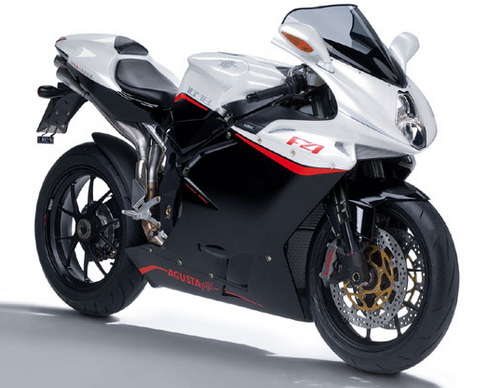
MV Avagusta-F4RR
Suzuki_Hayabusa_GSX-1300
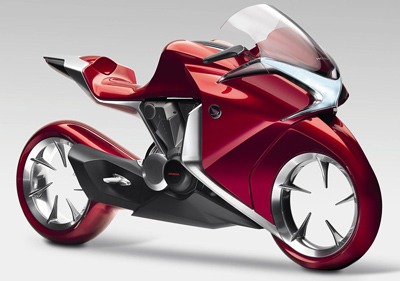
honda-v4-concept
MTT-Turbine
Dodge Tomahawk
Fastest Motorcycle-BMW-K1200S

World Top Bikes

Tesi 120
MV Avagusta-F4RR
Suzuki_Hayabusa_GSX-1300
honda-v4-concept
MTT-Turbine
Dodge Tomahawk
Fastest Motorcycle-BMW-K1200S

Thursday, February 24, 2011

Yamaha YZF-R1 ,Review 1998_2010 Full Technical Data

The Yamaha YZF-R1 is an open class sport bike, or superbike, motorcycle manufactured by Yamaha Motor Company since 1998.


 1998–1999

Yamaha launched the YZF-R1 after redesigning the Genesis engine to offset the crankshaft, gearbox input and output shafts. This "compacting" of the engine yielded a huge dividend in that the total engine length was now much shorter. This allowed the wheelbase to be shortened significantly which resulted in much quicker handling and an optimized center of gravity. The bike had a compression ratio of 11.8:1 with a 6-speed multi-plate clutch transmission.
The launch model Yamaha YZF-R1 was available either in white-on-red or in blue. Early models were subject to a worldwide recall for a clutch problem. Yamaha today describes the launch of the R1 as the true value of "Kando".

2005 YZF-R1 instrumentation
The 1999 R1 saw only minor changes apart from paint and graphics. Notable improvements were a redesigned gear change linkage and the gear change shaft length which was increased for better gear shifting. Fuel tank reserve capacity was reduced from 5.5 l (1.2 imp gal; 1.5 US gal) to 4.0 l (0.88 imp gal; 1.1 US gal), while the total fuel tank capacity was unchanged at 18 l (4.0 imp gal; 4.8 US gal). A second worldwide recall was issued for 1998 and early 1999 models to change a coolant hose clamp under the fuel tank which could come loose under hard use.
Motorcycle Consumer News tests of the 1998 model year YZF-R1 yielded a 0 to 60 mph (0 to 97 km/h) time of 2.96 seconds and 0 to 100 mph (0 to 160 km/h) of 5.93 seconds, a ¼ mile time of 10.19 seconds at 131.40 mph (211.47 km/h), and a top speed of 168 mph (270 km/h), with deceleration from 60 to 0 mph (97 to 0 km/h) of 113.9 ft (34.7 m). For the 1999 model year, Cycle World tests found a 0 to 60 mph (0 to 97 km/h) time of 3.0 seconds, ¼ mile time of 10.31 seconds at 139.55 mph (224.58 km/h), and a top speed of 170 mph (270 km/h).
2001 YZF-R1

 2000–2001

In 2000, Yamaha introduced a series of changes to improve the bike, plus minor changes to the body work to allow for better long-duration ride handling. The R1 was an excellent bike to ride on short runs, but due to its quick handling was not a favorite long-ride bike. Yamaha's main design goal was to sharpen the preexisting bike and not redesign it. Even so they instituted over 150 changes in hopes of making an already light, sleek and mean motorcycle even lighter, sleeker and meaner. For example, even with the addition of the new Air Induction System, which weighs four pounds, the overall weight of the bike is down five pounds to 414 lb (188 kg)[7] dry. At 127.8 bhp (95.3 kW) at the rear wheel, top-end output remains the same but changes to the engine management system are supposed to result in a smoother, broader distribution of power. The bodywork is still unmistakably R1 although a few changes were made resulting in a 3% reduction in the drag coefficient. The headlight housing's profile was sharpened, the side panels were made more aerodynamic and slippery and the windscreen was reshaped for better rider protection. These redesigns changed the bodywork to a large enough degree that previous years' bodywork will not fit the 2000 model. The seating area was also updated. The fuel tank was reshaped with a more relaxed rear angle and deeper leg recesses to provide for better rider feel. The seat extended further towards the front of the tank and the new, steeper seating position put additional weight on the front end. All of this was aimed at improving weight bias and offering sharper cornering and more stability, sharpening what was already a very sharp package. Engine-wise, the carburetors were rejetted in an effort to improve throttle response—especially in the low end—all the way up to the bike's 11,750 rpm redline. The redesigned camshafts were lightened and use internal oil ways to lubricate journals that, when combined with reduced tappet clearance, provided less friction and create less engine noise. The gearbox received a taller first gear, a hollow chrome-moly shift-shaft with an additional bearing and a completely redesigned shift linkage and foot pedal. These changes were aimed at nixing the 1998 - 1999 generation's transmission complaints as well as helping to transfer as seamlessly as possible the R1's prodigious power to the tarmac.

2002–2003

2002 YZF-R1 with aftermarket high-mount exhaust
A new fuel injection system was introduced for the 2002 year, which worked like a carburetor by employing a CV carburetor slide controlled by vacuum created by the engine. With a similar power output to the 2000-2001 bike, the engine was remained largely the same. One notable improvement was the use of new cylinder sleeves of a high silicon content alloy containing magnesium that minimized heat induced distortion, reducing oil consumption. Also in 2002, Yamaha released the newly developed "Deltabox III" frame,which, with its hydro formed construction, dramatically reduced the total number of frame welds. These changes improved the frame's rigidity by 30%. The cooling system was redesigned for better performance and compactness. The exhaust system was changed from a 4-into-1 to a new titanium 4-into-2-into-1 design. The rear end of the motorcycle was updated and streamlined with a LED taillight. This allowed for very clean rear body lines when choosing one of several common after market modifications, such as removal of the turn signal stalks and stock license plate bracket; and replacing them with assorted available replacements that "hug" the body or frame. Also, front end lighting was improved in 2002, between the higher definition headlights and also side "parking" lights within the twin-headlight panel, giving a more angular appearance. This also gave additional after market possibilities, such as to remove the front blinkers and utilize these front lights as directional or hazard markers while stopped. For 2003, the only change was the choice of colors, fitted hazard warning lights and dipped headlights, which stay on all the time the engine is running. The previous years all had a "Red" option, but this was replaced by a black with red flames "Special Edition" which cost an extra $100.
In 2002, Cycle World reported fuel mileage of 38 mpg-US (6.2 L/100 km; 46 mpg-imp), a 0 to 60 mph (0 to 97 km/h) time of 2.9 seconds, a ¼ mile time of 10.32 seconds at 137.60 mph (221.45 km/h), and a top speed of 167 mph (269 km/h).

2004–2005

2004 YZF-R1
With the competition advancing, Yamaha took to a major development. This included style updates like an under seat twin exhaust, and performance upgrades including radial brakes and for the first time on an R1 Ram-air intake. Furthermore, the wheelie-tendency known from earlier productions is drastically reduced by changing frame geometry and weight properties. The all new engine (no longer used as a stressed member of the chassis) featured a separate top crankcase and cylinder block. The 2004 R1 produces 132-134hp at the rear wheel, and also weighs 172 kilograms (dry). The conventional front brake calipers were replaced by radially-mounted calipers, activated by a radial master cylinder. Also newly added for this year was a factory installed steering damper. Combined with the changes to the frame, it helped to eliminate the tendency of the handlebars to shake violently during rapid acceleration or more so during deceleration on downgrade and less-than-perfect surfaces (aka "tank slapping").
2006 YZF-R1

2006

The 06 R1 produces 132-134 horsepower at the rear wheel.In addition, the swingarm was extended 20 mm longer due to acceleration instability. Also, in 2006 the 50th anniversary of Yamaha racing in America, Yamaha released the limited edition version in original Yamaha racing colors. The model (LE/SP) featured a Kenny Roberts replica paint pattern with yellow and black paint, and front and rear custom Öhlins suspension units developed by the people who work on the YZR-M1 MotoGP bike. Custom forged aluminum Marchesini wheels specifically designed for the LE shaved nearly a pound of unsprung weight. And a back torque-limiting slipper clutch, and an integrated lap timer rounded out the package making the LE more of a production racer. Only 500 units were made for the United States.
2007-2008 YZF-R1

2007–2008

2007 Yamaha YZF-R1 used by Noriyuki Haga in the Superbike  
 
World Championship.
An all-new YZF-R1 for the 2007 model year was announced on 8 October 2006. Key features include an all-new inline four-cylinder engine; going back to a more conventional four-valves per cylinder rather than Yamaha's trade mark five-valve Genesis layout. Other new features are the Yamaha Chip Control Intake (YCC-I) electronic variable-length intake funnel system, Yamaha Chip Control Throttle (YCC-T) fly-by-wire throttle system, slipper-type clutch, all-new aluminum Deltabox frame and swingarm, six-piston radial-mount front brake calipers with 310 mm discs, a wider radiator, and M1 styling on the new large ram-air ports in the front fairing. There were no major changes for 2008. Power was 152.9 hp (114.0 kW) @ 10,160 rpm.

2009–2010

In late 2008 Yamaha announced they would release an all new R1 for 2009. The new R1 takes engine technology from the M1 Motogp bike with its cross plane crankshaft, the first ever production motorcycle to do so. Crossplane technology, puts each connecting rod 90° from the next, with an uneven firing interval of 270°- 180°- 90°- 180°. The idea of this technology is to reduce internal crankshaft torque, thus giving the new R1 a more linear power delivery. Yamaha claims the bike would give the rider 'two engines in one', the low end torque of a twin and the pace of an inline four. As with previous incarnations of the R1 the 2009 model keeps its YCC-T (Yamaha Chip Controlled Throttle). The R1 now produces 136-138 hp at the rear tire.
Another advancement included on the 2009 model is D-Mode Throttle Control Valve Mapping which allows a rider to choose between three distinct maps depending on the rider’s environment. Each mode of operation controls YCC-T characteristics changing how the R1 reacts to driver input. The first mode is Standard Mode, which delivers performance for a wide variety of driving conditions. The second mode is "A" mode which will give a rider more available power in the lower to middle RPM range. The third mode is "B" mode, which is a dial back of the previous mode, designed to soften throttle response in inclement weather and heavy traffic. D-Mode throttle control is controlled via the rider through a forward mode button near the throttle. The instrument panel is more comprehensive than previous models and the 2009/2010 Yamaha YZF-R1 model now features a gear indicator as standard.
Overall handling of the R1 was improved through several changes to frame and suspension. A new sub frame was designed for the 2009 R1 which is magnesium cast in a carbon fiber mold. This new subframe offers a superior strength to weight ratio, while helping keep mass closer to the center of gravity and subsequently gives the bike greater handling performance. The rear shock absorber on the 2009 offers variable speed damping as well as an easy to tweak preload via a screw adjustment. The rear shock now connects underneath the swing arm through different linkage; a change from previous years models. Front suspension takes its cues from the M1 as the left fork handles compression damping while the right controls the rebound duties. To improve overall handling and safety, this is the first year Yamaha developers included an electronic steering damper on a production R1.
The overall look of the R1 has changed drastically. In a side by side comparison between last year’s model and the 2009; to the eye, the 2009 looks much more compact and could be compared to the size of the R6r. The center up exhaust on the 2009 seems significantly larger compared to previous years, due in some respects to changes in emissions controls. The front has the same classic R1 shape, though the air intake location and headlamp design have been revamped on the 2009 model; utilizing only projector lamps and using the new found design space within the nose cone to reroute ram air tubes next to the lights.
Testing the 2010 model year, Motorcyclist reported a ¼ mile time of 10.02 seconds @ 144.23 mph (232.12 km/h), a top speed of 165 mph (266 km/h), and fuel mileage of 25 mpg-US (9.4 L/100 km; 30 mpg-imp)

Yamaha YZF-R1 ,Review 1998_2010 Full Technical Data

The Yamaha YZF-R1 is an open class sport bike, or superbike, motorcycle manufactured by Yamaha Motor Company since 1998.


 1998–1999

Yamaha launched the YZF-R1 after redesigning the Genesis engine to offset the crankshaft, gearbox input and output shafts. This "compacting" of the engine yielded a huge dividend in that the total engine length was now much shorter. This allowed the wheelbase to be shortened significantly which resulted in much quicker handling and an optimized center of gravity. The bike had a compression ratio of 11.8:1 with a 6-speed multi-plate clutch transmission.
The launch model Yamaha YZF-R1 was available either in white-on-red or in blue. Early models were subject to a worldwide recall for a clutch problem. Yamaha today describes the launch of the R1 as the true value of "Kando".

2005 YZF-R1 instrumentation
The 1999 R1 saw only minor changes apart from paint and graphics. Notable improvements were a redesigned gear change linkage and the gear change shaft length which was increased for better gear shifting. Fuel tank reserve capacity was reduced from 5.5 l (1.2 imp gal; 1.5 US gal) to 4.0 l (0.88 imp gal; 1.1 US gal), while the total fuel tank capacity was unchanged at 18 l (4.0 imp gal; 4.8 US gal). A second worldwide recall was issued for 1998 and early 1999 models to change a coolant hose clamp under the fuel tank which could come loose under hard use.
Motorcycle Consumer News tests of the 1998 model year YZF-R1 yielded a 0 to 60 mph (0 to 97 km/h) time of 2.96 seconds and 0 to 100 mph (0 to 160 km/h) of 5.93 seconds, a ¼ mile time of 10.19 seconds at 131.40 mph (211.47 km/h), and a top speed of 168 mph (270 km/h), with deceleration from 60 to 0 mph (97 to 0 km/h) of 113.9 ft (34.7 m). For the 1999 model year, Cycle World tests found a 0 to 60 mph (0 to 97 km/h) time of 3.0 seconds, ¼ mile time of 10.31 seconds at 139.55 mph (224.58 km/h), and a top speed of 170 mph (270 km/h).
2001 YZF-R1

 2000–2001

In 2000, Yamaha introduced a series of changes to improve the bike, plus minor changes to the body work to allow for better long-duration ride handling. The R1 was an excellent bike to ride on short runs, but due to its quick handling was not a favorite long-ride bike. Yamaha's main design goal was to sharpen the preexisting bike and not redesign it. Even so they instituted over 150 changes in hopes of making an already light, sleek and mean motorcycle even lighter, sleeker and meaner. For example, even with the addition of the new Air Induction System, which weighs four pounds, the overall weight of the bike is down five pounds to 414 lb (188 kg)[7] dry. At 127.8 bhp (95.3 kW) at the rear wheel, top-end output remains the same but changes to the engine management system are supposed to result in a smoother, broader distribution of power. The bodywork is still unmistakably R1 although a few changes were made resulting in a 3% reduction in the drag coefficient. The headlight housing's profile was sharpened, the side panels were made more aerodynamic and slippery and the windscreen was reshaped for better rider protection. These redesigns changed the bodywork to a large enough degree that previous years' bodywork will not fit the 2000 model. The seating area was also updated. The fuel tank was reshaped with a more relaxed rear angle and deeper leg recesses to provide for better rider feel. The seat extended further towards the front of the tank and the new, steeper seating position put additional weight on the front end. All of this was aimed at improving weight bias and offering sharper cornering and more stability, sharpening what was already a very sharp package. Engine-wise, the carburetors were rejetted in an effort to improve throttle response—especially in the low end—all the way up to the bike's 11,750 rpm redline. The redesigned camshafts were lightened and use internal oil ways to lubricate journals that, when combined with reduced tappet clearance, provided less friction and create less engine noise. The gearbox received a taller first gear, a hollow chrome-moly shift-shaft with an additional bearing and a completely redesigned shift linkage and foot pedal. These changes were aimed at nixing the 1998 - 1999 generation's transmission complaints as well as helping to transfer as seamlessly as possible the R1's prodigious power to the tarmac.

2002–2003

2002 YZF-R1 with aftermarket high-mount exhaust
A new fuel injection system was introduced for the 2002 year, which worked like a carburetor by employing a CV carburetor slide controlled by vacuum created by the engine. With a similar power output to the 2000-2001 bike, the engine was remained largely the same. One notable improvement was the use of new cylinder sleeves of a high silicon content alloy containing magnesium that minimized heat induced distortion, reducing oil consumption. Also in 2002, Yamaha released the newly developed "Deltabox III" frame,which, with its hydro formed construction, dramatically reduced the total number of frame welds. These changes improved the frame's rigidity by 30%. The cooling system was redesigned for better performance and compactness. The exhaust system was changed from a 4-into-1 to a new titanium 4-into-2-into-1 design. The rear end of the motorcycle was updated and streamlined with a LED taillight. This allowed for very clean rear body lines when choosing one of several common after market modifications, such as removal of the turn signal stalks and stock license plate bracket; and replacing them with assorted available replacements that "hug" the body or frame. Also, front end lighting was improved in 2002, between the higher definition headlights and also side "parking" lights within the twin-headlight panel, giving a more angular appearance. This also gave additional after market possibilities, such as to remove the front blinkers and utilize these front lights as directional or hazard markers while stopped. For 2003, the only change was the choice of colors, fitted hazard warning lights and dipped headlights, which stay on all the time the engine is running. The previous years all had a "Red" option, but this was replaced by a black with red flames "Special Edition" which cost an extra $100.
In 2002, Cycle World reported fuel mileage of 38 mpg-US (6.2 L/100 km; 46 mpg-imp), a 0 to 60 mph (0 to 97 km/h) time of 2.9 seconds, a ¼ mile time of 10.32 seconds at 137.60 mph (221.45 km/h), and a top speed of 167 mph (269 km/h).

2004–2005

2004 YZF-R1
With the competition advancing, Yamaha took to a major development. This included style updates like an under seat twin exhaust, and performance upgrades including radial brakes and for the first time on an R1 Ram-air intake. Furthermore, the wheelie-tendency known from earlier productions is drastically reduced by changing frame geometry and weight properties. The all new engine (no longer used as a stressed member of the chassis) featured a separate top crankcase and cylinder block. The 2004 R1 produces 132-134hp at the rear wheel, and also weighs 172 kilograms (dry). The conventional front brake calipers were replaced by radially-mounted calipers, activated by a radial master cylinder. Also newly added for this year was a factory installed steering damper. Combined with the changes to the frame, it helped to eliminate the tendency of the handlebars to shake violently during rapid acceleration or more so during deceleration on downgrade and less-than-perfect surfaces (aka "tank slapping").
2006 YZF-R1

2006

The 06 R1 produces 132-134 horsepower at the rear wheel.In addition, the swingarm was extended 20 mm longer due to acceleration instability. Also, in 2006 the 50th anniversary of Yamaha racing in America, Yamaha released the limited edition version in original Yamaha racing colors. The model (LE/SP) featured a Kenny Roberts replica paint pattern with yellow and black paint, and front and rear custom Öhlins suspension units developed by the people who work on the YZR-M1 MotoGP bike. Custom forged aluminum Marchesini wheels specifically designed for the LE shaved nearly a pound of unsprung weight. And a back torque-limiting slipper clutch, and an integrated lap timer rounded out the package making the LE more of a production racer. Only 500 units were made for the United States.
2007-2008 YZF-R1

2007–2008

2007 Yamaha YZF-R1 used by Noriyuki Haga in the Superbike  
 
World Championship.
An all-new YZF-R1 for the 2007 model year was announced on 8 October 2006. Key features include an all-new inline four-cylinder engine; going back to a more conventional four-valves per cylinder rather than Yamaha's trade mark five-valve Genesis layout. Other new features are the Yamaha Chip Control Intake (YCC-I) electronic variable-length intake funnel system, Yamaha Chip Control Throttle (YCC-T) fly-by-wire throttle system, slipper-type clutch, all-new aluminum Deltabox frame and swingarm, six-piston radial-mount front brake calipers with 310 mm discs, a wider radiator, and M1 styling on the new large ram-air ports in the front fairing. There were no major changes for 2008. Power was 152.9 hp (114.0 kW) @ 10,160 rpm.

2009–2010

In late 2008 Yamaha announced they would release an all new R1 for 2009. The new R1 takes engine technology from the M1 Motogp bike with its cross plane crankshaft, the first ever production motorcycle to do so. Crossplane technology, puts each connecting rod 90° from the next, with an uneven firing interval of 270°- 180°- 90°- 180°. The idea of this technology is to reduce internal crankshaft torque, thus giving the new R1 a more linear power delivery. Yamaha claims the bike would give the rider 'two engines in one', the low end torque of a twin and the pace of an inline four. As with previous incarnations of the R1 the 2009 model keeps its YCC-T (Yamaha Chip Controlled Throttle). The R1 now produces 136-138 hp at the rear tire.
Another advancement included on the 2009 model is D-Mode Throttle Control Valve Mapping which allows a rider to choose between three distinct maps depending on the rider’s environment. Each mode of operation controls YCC-T characteristics changing how the R1 reacts to driver input. The first mode is Standard Mode, which delivers performance for a wide variety of driving conditions. The second mode is "A" mode which will give a rider more available power in the lower to middle RPM range. The third mode is "B" mode, which is a dial back of the previous mode, designed to soften throttle response in inclement weather and heavy traffic. D-Mode throttle control is controlled via the rider through a forward mode button near the throttle. The instrument panel is more comprehensive than previous models and the 2009/2010 Yamaha YZF-R1 model now features a gear indicator as standard.
Overall handling of the R1 was improved through several changes to frame and suspension. A new sub frame was designed for the 2009 R1 which is magnesium cast in a carbon fiber mold. This new subframe offers a superior strength to weight ratio, while helping keep mass closer to the center of gravity and subsequently gives the bike greater handling performance. The rear shock absorber on the 2009 offers variable speed damping as well as an easy to tweak preload via a screw adjustment. The rear shock now connects underneath the swing arm through different linkage; a change from previous years models. Front suspension takes its cues from the M1 as the left fork handles compression damping while the right controls the rebound duties. To improve overall handling and safety, this is the first year Yamaha developers included an electronic steering damper on a production R1.
The overall look of the R1 has changed drastically. In a side by side comparison between last year’s model and the 2009; to the eye, the 2009 looks much more compact and could be compared to the size of the R6r. The center up exhaust on the 2009 seems significantly larger compared to previous years, due in some respects to changes in emissions controls. The front has the same classic R1 shape, though the air intake location and headlamp design have been revamped on the 2009 model; utilizing only projector lamps and using the new found design space within the nose cone to reroute ram air tubes next to the lights.
Testing the 2010 model year, Motorcyclist reported a ¼ mile time of 10.02 seconds @ 144.23 mph (232.12 km/h), a top speed of 165 mph (266 km/h), and fuel mileage of 25 mpg-US (9.4 L/100 km; 30 mpg-imp)

Yamaha R1


Related Posts Plugin for WordPress, Blogger...